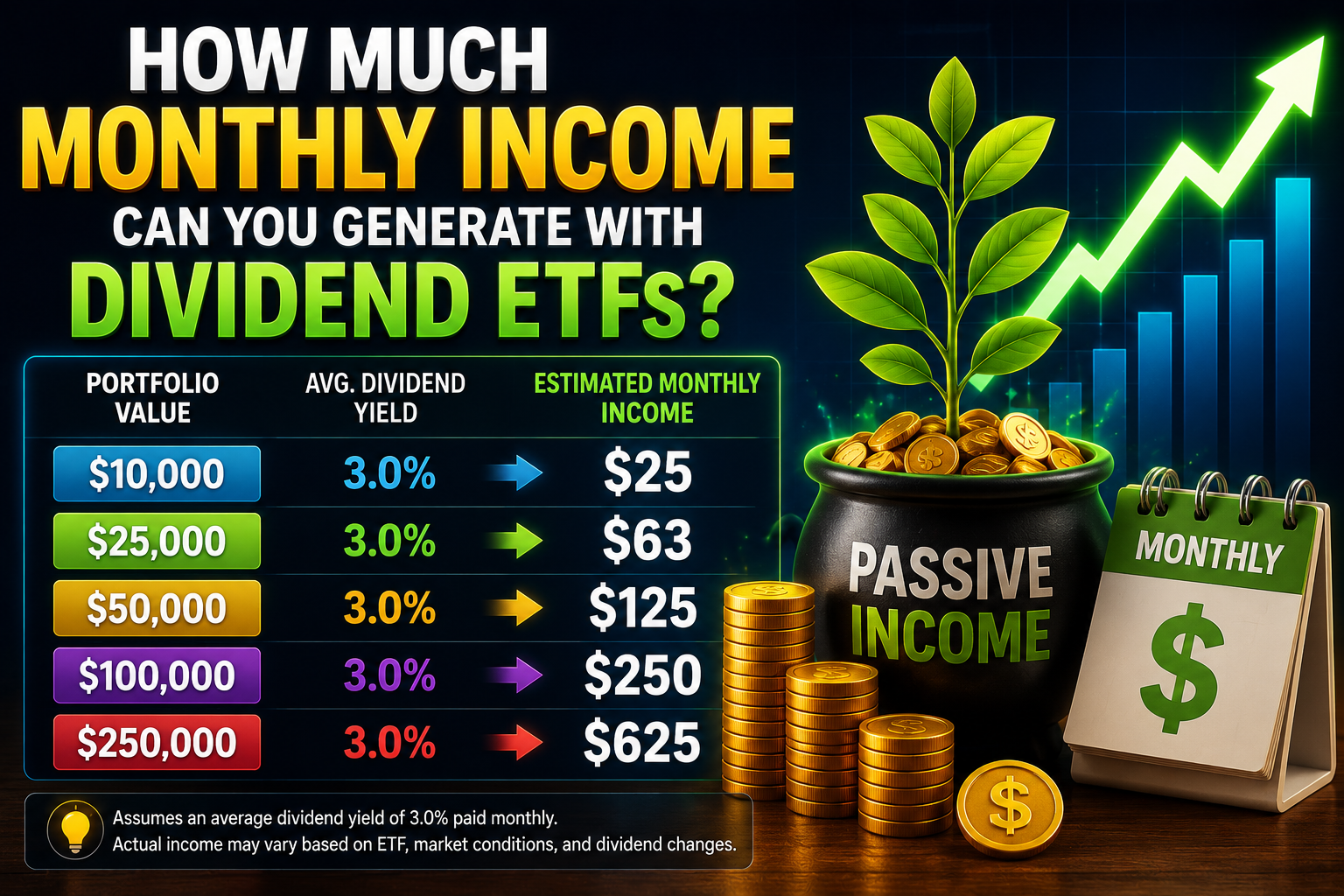
High-yield dividend ETFs have become one of the most popular ways to generate passive income from the stock market. Instead of picking individual dividend stocks, investors can buy a single fund that distributes income from dozens—or even hundreds—of companies. However, not all high-yield ETFs are created equal. Some focus on stable dividend growth, while others prioritize maximum income, sometimes at the cost of long-term appreciation.
In this article, we rank and analyze some of the best high-yield dividend ETFs this year based on yield, strategy, risk profile, and expense ratios. The goal is to help you understand not just which ETFs pay the most, but which ones are actually sustainable for long-term investing.
1. Schwab U.S. Dividend Equity ETF (SCHD) – Best overall balance
The Schwab U.S. Dividend Equity ETF (SCHD) is widely considered one of the best all-around dividend ETFs in the market today.
SCHD focuses on high-quality U.S. companies with strong financial health, consistent dividends, and long-term growth potential. Instead of chasing the highest yield, it screens for companies with strong cash flow, return on equity, and a history of dividend payments.
Typical yield: ~3.3%–3.8%
Expense ratio: 0.06%
What makes SCHD stand out is its combination of income and growth. Dividend payments tend to grow over time, meaning investors often see increasing income even if the initial yield is not the highest.
It is especially attractive for long-term investors who want sustainable income without sacrificing capital appreciation.
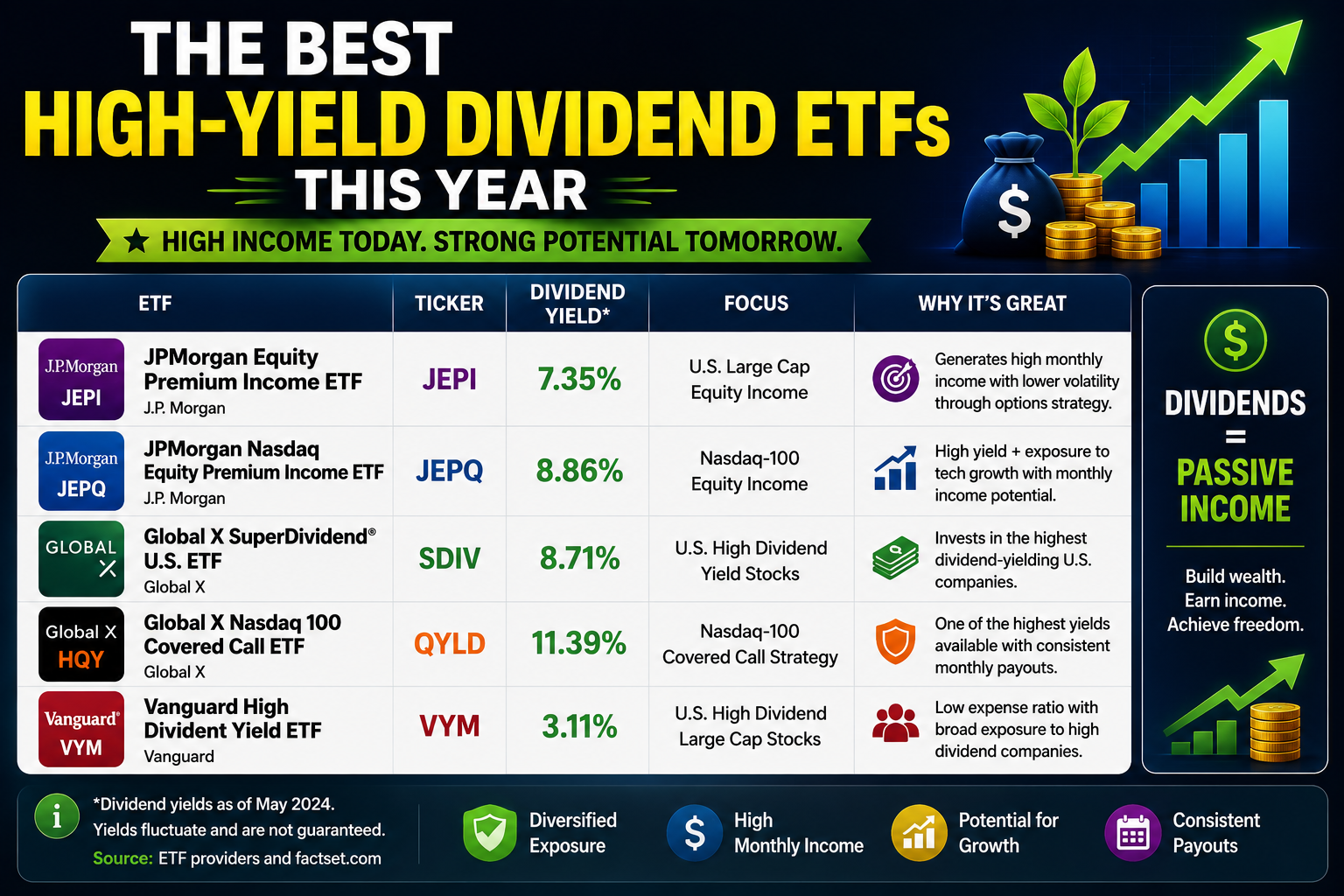
2. JPMorgan Equity Premium Income ETF (JEPI) – High monthly income
The JPMorgan Equity Premium Income ETF (JEPI) is one of the most popular high-income ETFs due to its large monthly payouts.
JEPI uses a covered call strategy, meaning it generates income by selling options on its equity portfolio. This allows it to produce much higher yields than traditional dividend ETFs.
Typical yield: ~7%–9%
Expense ratio: 0.35%
The key advantage is consistent monthly cash flow, making JEPI especially attractive for retirees or investors who want regular income.
However, the trade-off is upside limitation. In strong bull markets, JEPI may underperform the S&P 500 because part of its potential gains is exchanged for income.
3. JPMorgan Nasdaq Equity Premium Income ETF (JEPQ) – Tech-focused income
The JPMorgan Nasdaq Equity Premium Income ETF (JEPQ) is similar to JEPI but focuses on Nasdaq-100 stocks, giving it a more technology-heavy exposure.
Typical yield: ~8%–10%
Expense ratio: 0.35%
Because it is more concentrated in growth-oriented tech companies, JEPQ can offer higher income potential but also higher volatility. It also uses a covered call strategy, which caps upside during strong rallies.
JEPQ is often seen as a “higher risk, higher income” version of JEPI.
4. Vanguard High Dividend Yield ETF (VYM) – Broad diversification
The Vanguard High Dividend Yield ETF (VYM) is one of the most diversified high-dividend ETFs available.
It tracks a broad index of U.S. companies with above-average dividend yields, holding hundreds of stocks across sectors like financials, healthcare, and consumer goods.
Typical yield: ~2.8%–3.2%
Expense ratio: 0.06%
While its yield is lower than JEPI or JEPQ, VYM offers more stability and lower concentration risk. It is often used as a core income ETF in long-term portfolios.
5. SPDR Portfolio S&P 500 High Dividend ETF (SPYD) – Higher yield at lower cost
The SPDR Portfolio S&P 500 High Dividend ETF (SPYD) targets the highest-yielding stocks within the S&P 500.
Typical yield: ~4%–4.5%
Expense ratio: 0.07%
SPYD provides a higher income level than VYM or SCHD but tends to be more concentrated in sectors like real estate and utilities. This can make it more sensitive during economic downturns.
It is a simple, low-cost way to boost yield, but with less emphasis on dividend growth or quality.
6. iShares Select Dividend ETF (DVY) – High yield with quality tilt
The iShares Select Dividend ETF (DVY) focuses on companies with consistent dividend history and relatively high yields.
Typical yield: ~3.5%–4%
Expense ratio: ~0.38%
DVY includes utilities, financials, and consumer staples heavily. While it offers attractive income, its higher expense ratio and sector concentration make it less efficient than newer ETFs like SCHD.
Still, it remains a solid option for investors prioritizing income over growth.
7. HDV – Defensive, quality-focused dividend ETF
The iShares Core High Dividend ETF (HDV) screens for financially strong companies with sustainable dividends.
Typical yield: ~2.8%–3.2%
Expense ratio: ~0.08%
HDV is more defensive than most high-yield ETFs, focusing on stable companies in sectors like healthcare and energy. It sacrifices yield for quality and lower volatility.
Key comparison of top high-yield dividend ETFs
Here is a simplified breakdown of the main ETFs:
| ETF | Strategy | Yield | Expense Ratio | Risk Level |
|---|---|---|---|---|
| Schwab U.S. Dividend Equity ETF (SCHD) | Dividend growth + quality | ~3–4% | 0.06% | Medium |
| JPMorgan Equity Premium Income ETF (JEPI) | Covered call income | ~7–9% | 0.35% | Low–Medium |
| JPMorgan Nasdaq Equity Premium Income ETF (JEPQ) | Tech income + options | ~8–10% | 0.35% | Medium–High |
| Vanguard High Dividend Yield ETF (VYM) | Broad high dividend exposure | ~3% | 0.06% | Low–Medium |
| SPDR Portfolio S&P 500 High Dividend ETF (SPYD) | High yield S&P selection | ~4–4.5% | 0.07% | Medium |
How to choose the right high-yield ETF
The key mistake many investors make is chasing the highest yield without considering total return or sustainability.
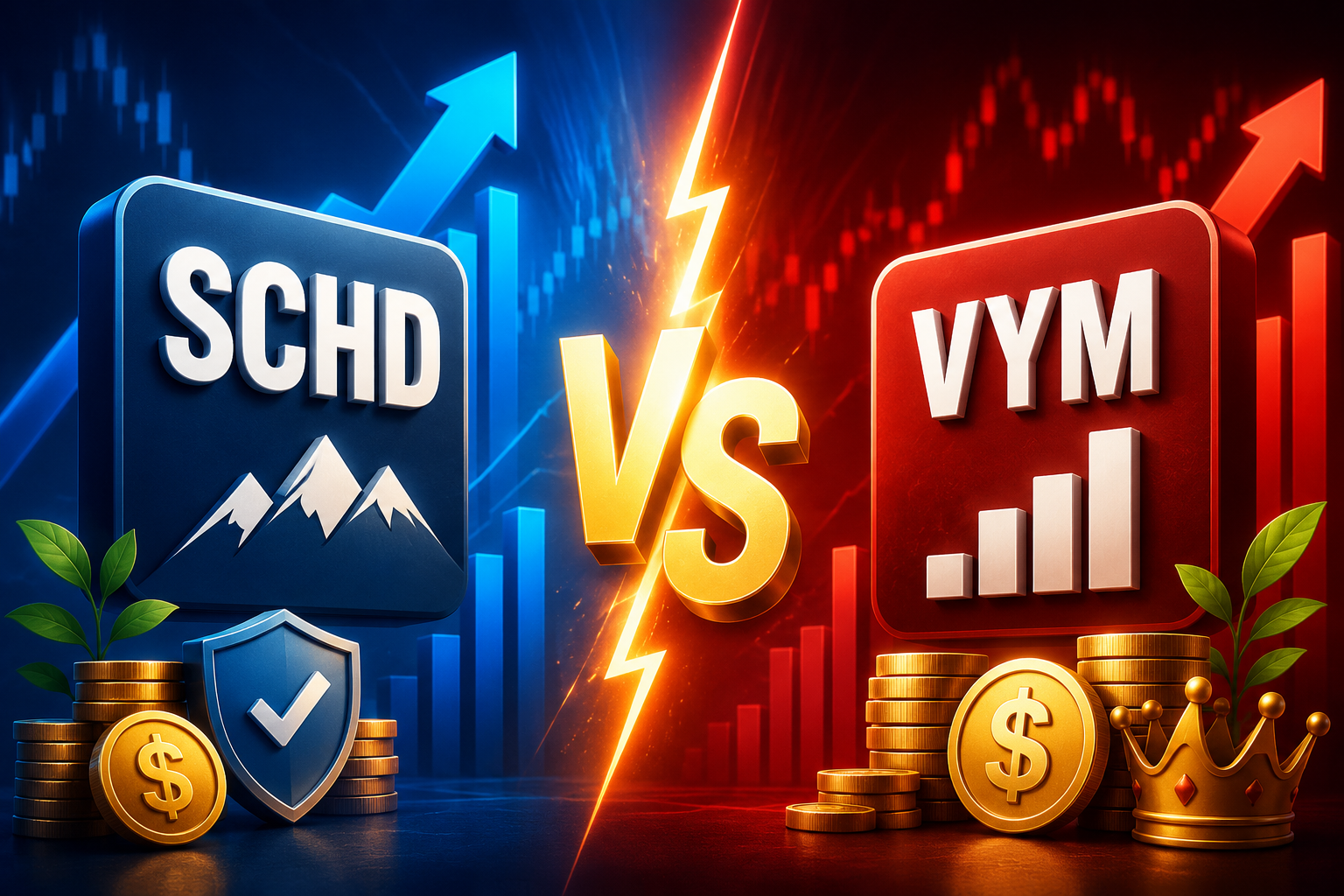
If your goal is long-term wealth building with steady income growth, SCHD or VYM are usually stronger core holdings. If your goal is immediate monthly cash flow, JEPI or JEPQ may be more appropriate.
A useful rule of thumb:
- SCHD / VYM: best for long-term compounding
- JEPI / JEPQ: best for monthly income
- SPYD / DVY: best for higher yield but more concentration risk
Conclusion
High-yield dividend ETFs offer a convenient way to generate passive income, but the “best” choice depends heavily on your time horizon and income needs.
Schwab U.S. Dividend Equity ETF (SCHD) stands out as the most balanced long-term option due to its quality focus and low cost. Meanwhile, JPMorgan Equity Premium Income ETF (JEPI) and JPMorgan Nasdaq Equity Premium Income ETF (JEPQ) dominate the high-income space for investors prioritizing monthly cash flow.
Ultimately, the best ETF is not just the one that pays the highest yield today—but the one that fits your strategy, risk tolerance, and long-term financial goals.